5 Things the 2026 Restaurant AI Numbers Actually Tell You
AI adoption in restaurants doubled in 2026 — almost entirely in the back office. Here's how to read the figures before you benchmark your group against them.
Two credible surveys landed in 2026 with figures that look like they disagree. The National Restaurant Association put operator AI use at 26%. Restaurant365 put it at 62%. Neither is wrong, and an operator who reads both can reasonably conclude the whole category is noise.
They're counting different rooms. Here are five things the numbers say once you line them up.
1. Adoption doubled — in the back office
Restaurant365's mid-year report, published July 16, found 62% of operators have implemented or plan to implement AI in at least one back-office function — more than double the level at the start of the year. Reporting and analytics led by a wide margin, with scheduling and inventory forecasting well behind it.
2. The dining room barely moved
The NRA's 2026 State of the Restaurant Industry put overall operator AI use at 26%, and use for guest orders at just 6%. Whatever happened this year, it mostly didn't happen in the stretch between a guest sitting down and the check being paid.
“Every adoption number you'll be quoted this year is really a statement about who got asked.”
— Ready Operations
3. The two numbers have different denominators
The 26% counts tools in use across all operators. The 62% counts implemented-or-planned back-office adoption among 420-odd operators running close to 10,000 locations — a multi-unit sample that already buys back-office software. One measures the industry, the other measures a room full of buyers. Both are honest. Ask what got counted and who got asked before either figure tells you whether you're behind.
4. The pilots landed where the data already lived
That's the whole reason back-office AI ran ahead, and the logic chains:
- Sales history, invoices and labor hours are already structured and already stored.
- A model can read them without touching service.
- A wrong answer costs you a re-run of a report, not a table.
Guest-facing AI has to reach into the POS while service is running, where being wrong shows up in front of someone eating dinner. That's a plumbing problem, not an appetite problem.
5. Your next AI decision is a data-access question
Before you ask what a tool can do, ask what it can see. Can it read your POS live — open checks, menu, availability, table state — or is it working off last night's export? That answer sets the ceiling on everything the tool will ever do for a guest, and it's the one thing a demo rarely volunteers.
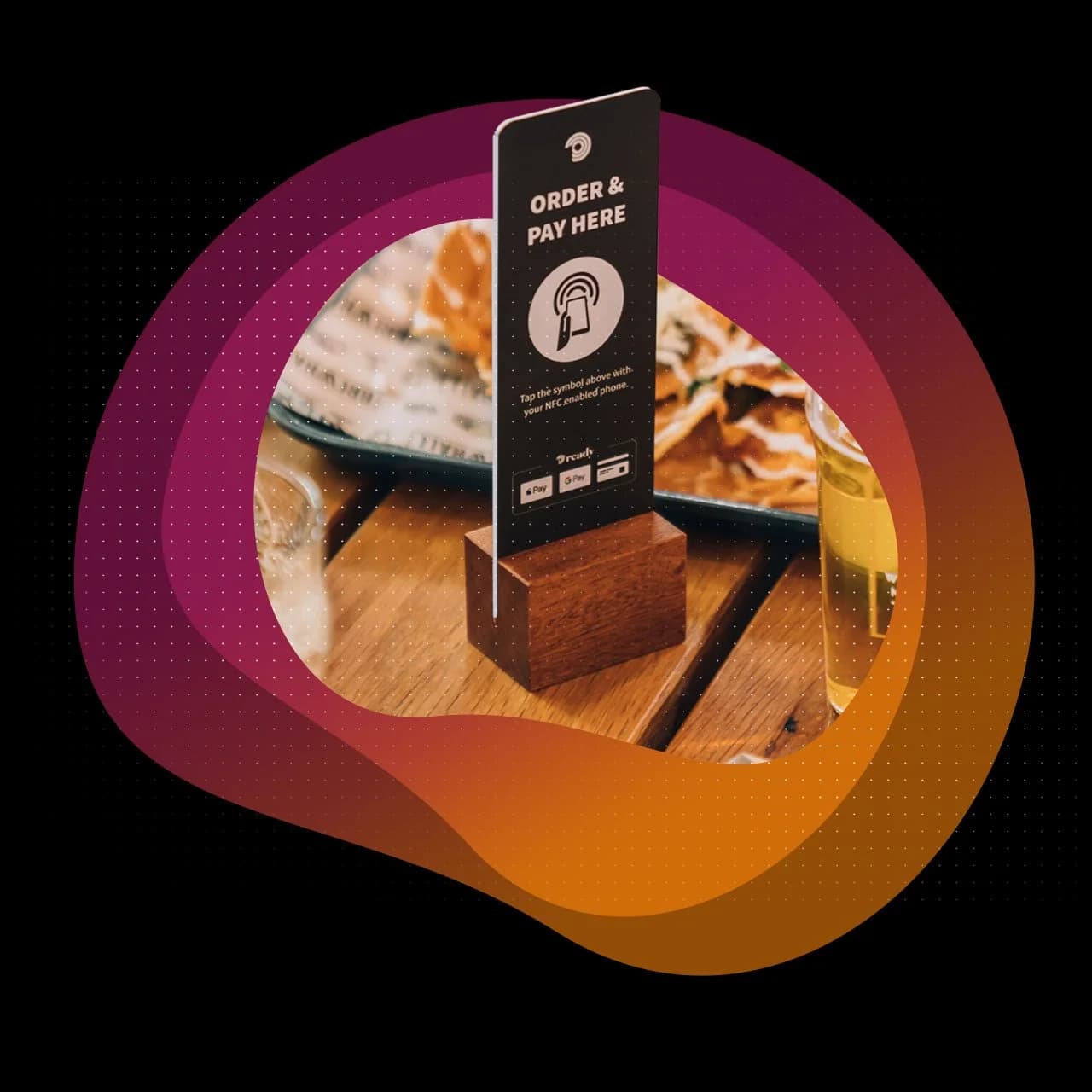
The back-office gains are real and worth chasing. But the 6% is the more interesting number, because it says the guest-facing side of this is still wide open — and the operators who move first will be the ones whose systems can already be read from mid-service. None of that requires ripping out your POS. Ready's guest-facing layer sits on top of the system you already run, Simphony included, so the front of house can move while the back office stays exactly where it is.
See it running in your restaurant
Ready layers order & pay onto your existing POS — no rip and replace.
Get a Demo